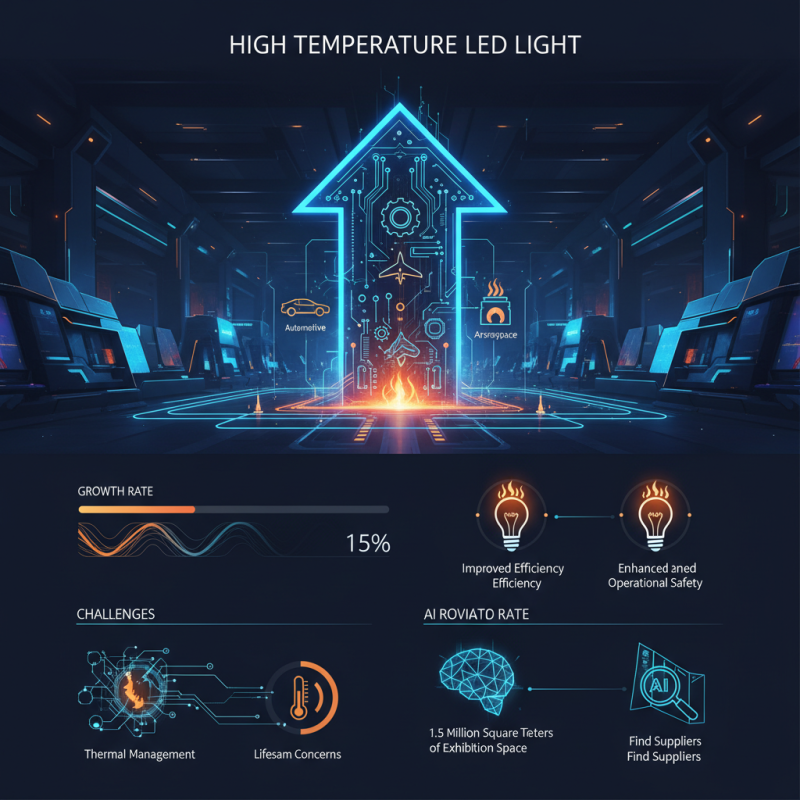
The advancements in "High Temperature LED Light" technology are set to spotlight the 2026 Canton Fair. This event, particularly the advanced manufacturing and electronics segment, will showcase cutting-edge innovations. The global market for High Temperature LED Lights has seen a remarkable growth rate of 15% annually, reflecting increasing demand in industries such as automotive and aerospace.
Dr. Emily Zhang, an expert in LED technologies, emphasizes, “High Temperature LED Lights not only improve efficiency but also enhance operational safety.” With features that withstand extreme temperatures, these lights play a pivotal role in various applications. However, challenges remain in addressing thermal management and life span concerns.
The 2026 Canton Fair introduces AI tools for better navigation. This innovation could help buyers find reliable suppliers of High Temperature LED Lights more effectively. With over 1.5 million square meters of exhibition space, it will be crucial for industry professionals to engage deeply with these trending technologies. One must ponder whether the current pace of innovation meets the industry’s growing needs.
The 2026 Canton Fair showcased an impressive array of high-temperature LED lights. These lights are designed to perform well in extreme heat environments, making them ideal for various applications. Brightness and durability were key features highlighted by exhibitors, drawing in many attendees.
One notable innovation was the heat-resistant casing, ensuring these lights can withstand intense conditions. They are not just practical but also energy-efficient. Several manufacturers demonstrated how these LEDs can reduce energy costs while providing powerful illumination. This makes them attractive for both businesses and consumers alike.
Tips: When considering high-temperature LED lights, check for certifications regarding thermal performance. Make sure the color temperature aligns with your needs, as it can affect ambiance. Overall, this growing market presents fascinating opportunities, yet there remains room for improvement in terms of sustainability and long-term usage. While advancements are impressive, ongoing reflections on performance and maintenance are vital for users.
The 2026 Canton Fair promises to showcase remarkable advancements in high temperature LED technology. Recent reports indicate a surge in demand for LEDs that withstand extreme conditions. The global market for these specialized LEDs is projected to reach $4 billion by 2027. This growth is driven by industries such as automotive, aerospace, and manufacturing.
High temperature LEDs excel in environments where traditional lighting fails. They can operate effectively at temperatures above 150 degrees Celsius. This capability opens new avenues for applications in harsh settings. For example, in steel manufacturing, where high heat is commonplace, LED lights enhance visibility and reduce energy consumption by 30% compared to conventional lighting.
However, challenges remain in the design and durability of these lights. Manufacturers need to consider heat dissipation and longevity. Implementing better materials could enhance performance. Moreover, the initial investment for high temperature LEDs can be steep. Many companies hesitate due to budget constraints, despite the long-term savings. Addressing these issues is crucial for further advancements in this promising technology.
High temperature LED lights have gained traction in various applications. These lights can withstand extreme environments, making them ideal for industries such as manufacturing and automotive. The durability of these LEDs reduces the need for frequent replacements. This benefit translates into significant cost savings and less downtime.
In addition to their longevity, high temperature LEDs offer bright, efficient illumination. This is crucial for safety in industrial settings. Their ability to operate in high heat without losing brightness is impressive. However, users must consider the heat management of these lights. Poor heat dissipation can lead to reduced lifespan and efficiency, which is a factor to ponder.
Application-wise, high temperature LEDs find use in outdoor lighting and high-bay warehouses. They work well in environments like steel mills or glass factories. While the advantages are clear, not every high temperature LED delivers excellent performance. Some may falter under extreme conditions, prompting reflection on product selection and suitability. Adopting the wrong type can hinder overall productivity.
The LED lighting market is evolving rapidly. At the upcoming Canton Fair in 2026, high-temperature LED lights will draw attention. Consumers are becoming more conscious of energy efficiency. They seek innovative solutions that are both effective and environmentally friendly.
Recent trends show a growing interest in customizable LED products. These lights can fit diverse needs. From residential to commercial use, they offer flexibility. However, many consumers find the variety overwhelming. It can be difficult to choose the right options amid intense marketing.
Moreover, the aesthetic appeal is significant. People want lights that enhance their spaces. However, not all products meet these visual expectations. Some LED lights may fall short in design or warmth. Balancing functionality with style remains a challenge. This opens doors for more feedback and improvements in future designs.
| Category | Market Demand | Energy Efficiency (%) | Consumer Preference (%) | Projected Growth Rate (2026) |
|---|---|---|---|---|
| Residential Lighting | High | 85% | 70% | 8% |
| Commercial Lighting | Very High | 90% | 75% | 10% |
| Industrial Lighting | Moderate | 80% | 60% | 6% |
| Outdoor Lighting | High | 88% | 65% | 9% |
| Automotive Lighting | Increasing | 87% | 68% | 7% |
High temperature LED lighting is making waves across various industries. It offers solutions where traditional lighting fails. For example, in manufacturing, machines often operate at extreme temperatures. Standard lights can’t withstand such heat. High temperature LEDs can function efficiently, providing necessary illumination without failure.
Moreover, high temperature LED lights have a long lifespan. They reduce maintenance needs and costs. In industries like food processing, these lights can withstand the harsh conditions often found in kitchens. Workers appreciate how these lights don’t emit excessive heat, enhancing comfort.
**Tips:** When selecting high temperature LEDs, check specifications carefully. Ensure they meet your industry needs. Also, consider energy efficiency ratings. This selection can lead to long-term savings and sustainability.
The future of high temperature LEDs looks promising. From automotive to aerospace, the demand is rising. Some sectors may lag in adoption. This could stem from a lack of awareness or budget constraints. As technology improves, prices are likely to drop. Thus, more businesses may embrace these innovations. Keeping an eye on trends is crucial for staying competitive.
This chart illustrates the projected growth in the adoption of high temperature LED lighting across different sectors by 2026. The data shows expected market demand in millions of USD.
: They are designed to perform well in extreme heat environments, ideal for various industrial applications.
A notable feature is the heat-resistant casing, which allows them to withstand intense conditions without damage.
They are energy-efficient, helping to reduce energy costs while providing powerful illumination.
Check for certifications regarding thermal performance and ensure the color temperature aligns with your needs.
They are suitable for outdoor lighting, high-bay warehouses, and industries like manufacturing and automotive.
They have a long lifespan, reducing frequent replacements and leading to significant cost savings and less downtime.
Some lights may falter under extreme conditions, which requires careful product selection and consideration of suitability.
They don’t emit excessive heat, which enhances comfort for workers in harsh kitchen environments.
Lack of awareness or budget constraints may contribute to slower adoption in some sectors.
The demand is rising, but keeping an eye on trends is vital for staying competitive as prices likely drop over time.
The 2026 Canton Fair showcased significant advancements in High Temperature LED Light technology, highlighting its remarkable innovations aimed at enhancing performance and efficiency. These lights are designed to endure extreme conditions, making them ideal for various applications in industrial settings, outdoor environments, and specialized areas such as horticulture.
The benefits of High Temperature LED Light include lower energy consumption, longer lifespan, and a reduced carbon footprint, drawing increased consumer interest and paving the way for market growth. As industries continue to evolve, the prospects for High Temperature LED Lighting look promising, with potential expansions in sectors ranging from agriculture to construction, underscoring the transformative impact of this technology on future lighting solutions.

Suvlux Light