2026 Best Solar Street Light Battery Capacity Guide?

Time:2026-09-29 Author:Isabella
0%

Reliable solar street lighting begins with one practical question: How does battery capacity affect solar street light autonomy? The answer reaches beyond amp-hours. Capacity determines how long a lamp can operate after sunset, during cloudy weather, or through several low-sunlight days.

A 2026 design must balance battery size, LED power, local weather, and lighting schedules. A 40-watt fixture using a 12-hour nightly profile needs a different battery than a 20-watt lamp dimmed after midnight. Temperature matters too. Cold conditions can reduce usable lithium battery capacity, while heat may accelerate battery aging. Small details become expensive failures.

Solar energy consultant and author Peter Gevorkian has stated, “Energy storage is the bridge between renewable generation and dependable power.” That principle applies directly to street lighting. A battery is not simply a larger tank. Its usable capacity depends on depth of discharge, charging efficiency, reserve margins, and controller settings.

This guide examines practical battery capacities for 2026 solar street lights. It connects calculations with field conditions, including winter autonomy, rainy seasons, traffic safety, and maintenance access. It also compares lithium iron phosphate and older lead-acid options without assuming that one chemistry fits every project.

The numbers may look simple.

Real streets are not.

A cautious design should test the darkest expected period, not only average annual sunlight. Oversizing can increase cost and embodied materials. Undersizing can leave roads dark after three cloudy nights. That uncomfortable trade-off deserves honest attention before anyone chooses a battery rating.
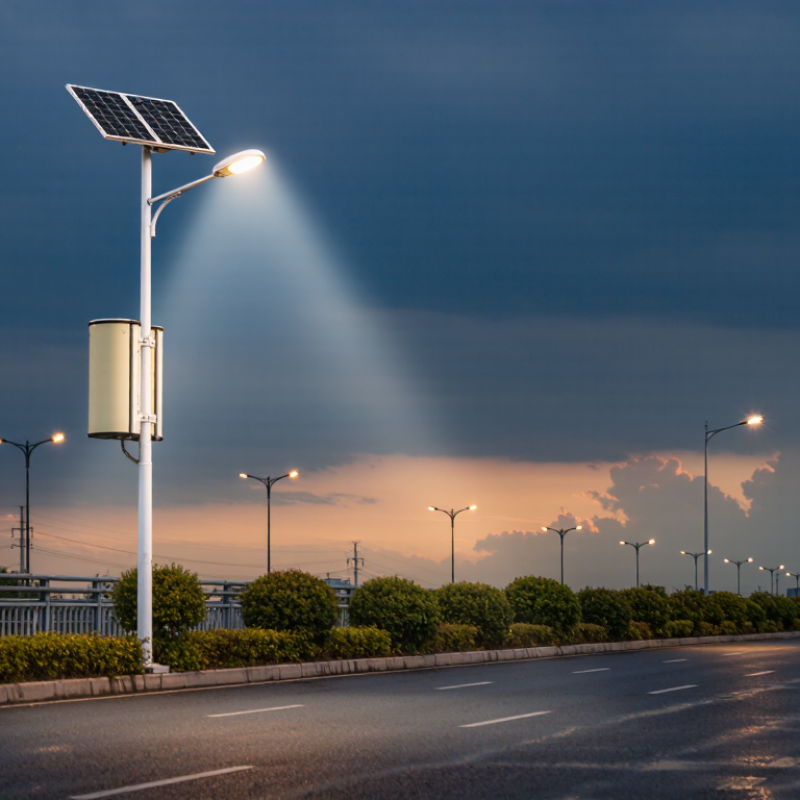
2026 Best Solar Street Light Battery Capacity Guide?

Understanding Battery Capacity in Solar Street Lights

Battery capacity describes how much energy a solar street light can store, usually in watt-hours (Wh) or amp-hours (Ah). Amp-hours alone can be misleading because voltage matters: a 12-volt, 40-Ah battery stores about 480 Wh before system losses. Check the battery’s usable capacity, not only its label.

A practical estimate starts with the light’s daily energy use. A 30-watt lamp running for eight hours needs about 240 Wh each night. Add room for cloudy weather, conversion losses, and battery aging. Cold nights can reduce available capacity, too. Then check how many nights of backup the site needs. Two nights without strong sunlight may require roughly twice the usable storage, though the final size depends on the battery type and controller settings.

Measure the real load. Dimming schedules can change it substantially. Oversizing is not always better; a larger battery costs more and may remain undercharged if the panel cannot replenish it. In the field, shade from a nearby tree can matter more than a neat calculation suggests. That part is easy to miss. Recheck the energy figures against local weather and actual operating hours before choosing capacity.

Key Factors That Determine the Required Battery Size

2026 Best Solar Street Light Battery Capacity Guide

Battery capacity is not chosen from lamp wattage alone. The required size depends on nightly load, autonomy, solar yield, temperature, and battery aging. Field commissioning often exposes one mistake: designers trust average sunlight. That is risky. The IEA PVPS Trends in Photovoltaic Applications 2024 report highlights continued global solar expansion, but local irradiation still varies sharply by season and location. Use site-specific solar data, not a worldwide average.

Start with energy demand: lamp power multiplied by operating hours, plus controller losses. A 40-watt lamp running for 12 hours uses about 480 watt-hours nightly. For three autonomy nights, the load becomes 1,440 watt-hours before losses. Divide this figure by the battery’s usable depth of discharge and inverter efficiency. For example, at 80% usable capacity and 90% system efficiency, the battery needs roughly 2,000 watt-hours. NREL guidance on photovoltaic system design also supports conservative loss and performance assumptions.

Cold weather reduces available capacity, while heat accelerates battery aging. The Global Solar Atlas shows why winter solar yield must receive special attention during sizing. Add a practical aging reserve, often 15% to 25%, depending on chemistry and maintenance expectations. Oversizing is not always safer; it can increase cost and leave batteries undercharged. A neat calculation can still fail. Review measured night loads, local temperature records, and at least one season of operating data before final approval.

How to Calculate Battery Capacity for Different Street Light Systems

2026 Best Solar Street Light Battery Capacity Guide

Battery sizing starts with nightly energy, not panel wattage. Multiply lamp power by operating hours, then include autonomy, efficiency, and allowable depth of discharge. For example, a 40 W lamp running 12 hours uses 480 Wh nightly. Three cloudy nights require 1,440 Wh. Using 90% controller efficiency, 90% battery efficiency, and 80% depth of discharge gives: 1,440 ÷ (0.90 × 0.90 × 0.80) = 2,222 Wh. A 24 V system therefore needs about 93 Ah. A 24 V, 100 Ah battery is the mathematical minimum, not always the practical choice. Temperature, aging, and irregular traffic patterns can increase demand.

NREL’s 2024 Annual Technology Baseline uses roughly 85%–90% round-trip efficiency for lithium-ion storage systems. This supports conservative design, but field results may differ. The World Bank’s Global Solar Atlas provides location-specific solar irradiation data, which helps match battery capacity with local recovery potential. Do not use annual averages alone. Winter conditions matter more. A coastal site, dusty panel, or long dusk can quietly reduce available energy.

Tips: Record real operating hours for at least two weeks. Check the controller’s low-voltage cutoff. Convert watt-hours to amp-hours using the battery’s actual operating voltage. Leave an aging margin of 15%–25%. This is not excessive. Yet oversizing can raise cost, weight, and charging time, so review the design after seasonal monitoring.

2026 Best Solar Street Light Battery Capacity Guide

Estimated nominal battery capacity for common solar street-light power levels. The calculation assumes 12 hours of nightly operation, a 12.8 V battery, 3 nights of autonomy, 90% usable depth of discharge, and 85% overall system efficiency.

Calculation: Battery capacity (Ah) = Light power (W) × operating hours × autonomy days ÷ (battery voltage × usable depth of discharge × system efficiency). Actual sizing should also consider local solar irradiation, temperature, battery chemistry, aging, and the required lighting schedule.

Comparing Battery Technologies for Solar Street Lighting

2026 Best Solar Street Light Battery Capacity Guide

Battery technology changes how a solar street light handles cloudy nights, heat, and daily cycling. Lead-acid batteries remain affordable, but they are heavy and usually need more room. Their usable capacity is also limited when deep discharge shortens service life. AGM and gel batteries reduce maintenance, yet they still lose performance in high temperatures.

Lithium iron phosphate batteries offer higher usable capacity in a smaller enclosure. They commonly support deeper discharge and more charge cycles than lead-acid options. Their battery management system can protect against overcharging, excessive discharge, and abnormal temperature. However, installation quality matters. A failed sensor or poorly matched charger can create expensive problems.

Cold weather matters too. Some lithium batteries should not charge below freezing without protection. That detail is easy to miss. Measure the night.

For capacity planning, estimate lamp wattage, operating hours, controller losses, and required autonomy. A 40-watt lamp running for 12 hours consumes about 480 watt-hours before system losses. Two cloudy nights may require roughly 1,200 watt-hours after adding conversion and reserve allowances.

Actual sizing should include local sunlight, panel output, battery voltage, and permitted depth of discharge. A spreadsheet can still mislead. Dust, shade, aging panels, and winter weather often reduce real performance. Field inspections should verify nighttime brightness and morning battery voltage, not just rely on rated specifications.

Choosing the Right Capacity for Climate, Usage, and Maintenance Needs

A solar street light’s battery should carry it through the longest expected stretch without useful sunlight, not just an average night. In a cloudy coastal town, several dim days can leave a small battery struggling before dawn. Start with the light’s nightly energy use, then allow extra capacity for weather, battery aging, and conversion losses. A practical reserve matters.

Usage changes the calculation. A road with steady overnight traffic may need full brightness for many hours, while a quiet path can use motion-based dimming. Check the programmed schedule carefully: a lamp running at high output from dusk until morning needs more stored energy than one that dims after midnight. Small settings add up.

Climate affects both charging and battery life. Cold conditions can reduce available capacity, while heat may accelerate aging, especially in an enclosed housing with poor ventilation. Ask for usable capacity at the expected temperature, not only the headline rating. That detail is easy to miss.

Maintenance also belongs in the decision. If lights are remote or difficult to reach, extra reserve can help cover a run of poor charging days. But a much larger battery is not automatically better; it may add cost and weight without solving a weak solar panel or faulty controller. I would check the site’s winter sunlight and actual operating schedule before choosing. Estimates are useful, but real site conditions can still surprise you.

FAQS

How do I estimate the battery capacity a solar street light needs?

Multiply lamp power by nightly operating hours, then account for controller losses, conversion efficiency, usable battery capacity, and cloudy nights. A 40-watt lamp running for 12 hours uses about 480 watt-hours before losses.

How many autonomy nights should I plan for?

Choose an autonomy period based on local weather and the importance of overnight lighting. For three nights, a 480-watt-hour nightly load becomes 1,440 watt-hours before system losses and battery limits.

Why isn’t lamp wattage enough to determine battery size?

Operating hours, dimming schedules, temperature, solar yield, and battery aging all affect capacity needs. A lamp running at full brightness until dawn needs more stored energy than one that dims after midnight.

How does cold weather affect battery planning?

Cold can reduce available battery capacity and may limit charging for some battery types. Check performance at expected site temperatures, especially during winter.

What reserve should I allow for battery aging?

A practical aging reserve is often 15% to 25%, depending on battery chemistry and maintenance expectations. The exact figure deserves a second look against real site conditions.

Are larger batteries always the safer choice?

No. A larger battery can add cost and weight, and may remain undercharged if the solar panel is too weak. Check panel output and controller condition too.

What should I consider when choosing a battery type?

Compare usable capacity, cycle life, temperature limits, maintenance needs, size, and protection features. Some lithium batteries need safeguards against charging below freezing.

How can I check whether the system is performing as expected?

Inspect nighttime brightness and measure morning battery voltage. Review operating schedules, winter sunlight, dust, shade, and panel condition; rated specifications can be misleading.

Conclusion

This guide explains how battery capacity shapes the performance and reliability of solar street lights. It covers the relationship between a battery’s stored energy and the light’s nightly operating hours, while showing how to estimate capacity based on lamp power, daily runtime, system efficiency, and the number of cloudy days the system should withstand. How does battery capacity affect solar street light autonomy? In general, a suitably sized battery can keep a light operating through longer nights or periods of limited sunlight, while an undersized one may lead to shorter runtimes or interruptions.

The guide also compares common battery technologies in terms of usable capacity, service life, charging behavior, and maintenance requirements. It highlights how local climate, seasonal sunlight, expected usage, and maintenance plans should influence capacity selection. By considering these factors together rather than relying on a single sizing rule, readers can choose a practical battery capacity that supports dependable illumination without unnecessary oversizing.

Isabella

Isabella

Isabella is a dedicated marketing professional with a sharp focus on driving brand growth and engagement through strategic content creation. With an extensive background in digital marketing, she combines her passion for storytelling with her keen understanding of industry trends to deliver......