Solar garden lights look simple, yet their motion sensors combine several small systems. Understanding them helps homeowners choose brighter, longer-lasting outdoor lighting.
How do motion sensors work on solar garden lights? Most models use a passive infrared sensor, or PIR sensor. It detects changes in heat from moving bodies, such as people, pets, or vehicles. During daylight, the solar panel charges an internal battery. At night, a light sensor tells the controller when illumination is low. When the PIR sensor notices movement, the controller sends stored energy to the LED.
The light may switch from a dim standby glow to full brightness. It usually stays bright for twenty seconds to several minutes. Solar-lighting engineer Dr. Sarah Hall explains, “A motion sensor saves battery power by delivering strong light only when movement requires it.” That principle sounds straightforward. Real gardens are less predictable.
Warm pets can trigger the sensor. Swaying branches may create false alarms. A sensor facing a busy pavement can drain the battery quickly. Placement matters. Install the unit about two metres above ground, aimed across a walkway rather than directly toward approaching movement. Keep the panel free from dust and shade. Even a small layer of dirt can reduce charging performance.
In this guide, we examine five of the best solar garden lights with motion sensors. We compare detection range, brightness, battery capacity, weather resistance, and installation flexibility. Ratings can still change with winter darkness, cloudy weather, and local temperatures. That limitation deserves attention. A bright product on a retailer’s page may perform modestly beside a north-facing wall. Good choices depend on your garden, not just impressive specifications.
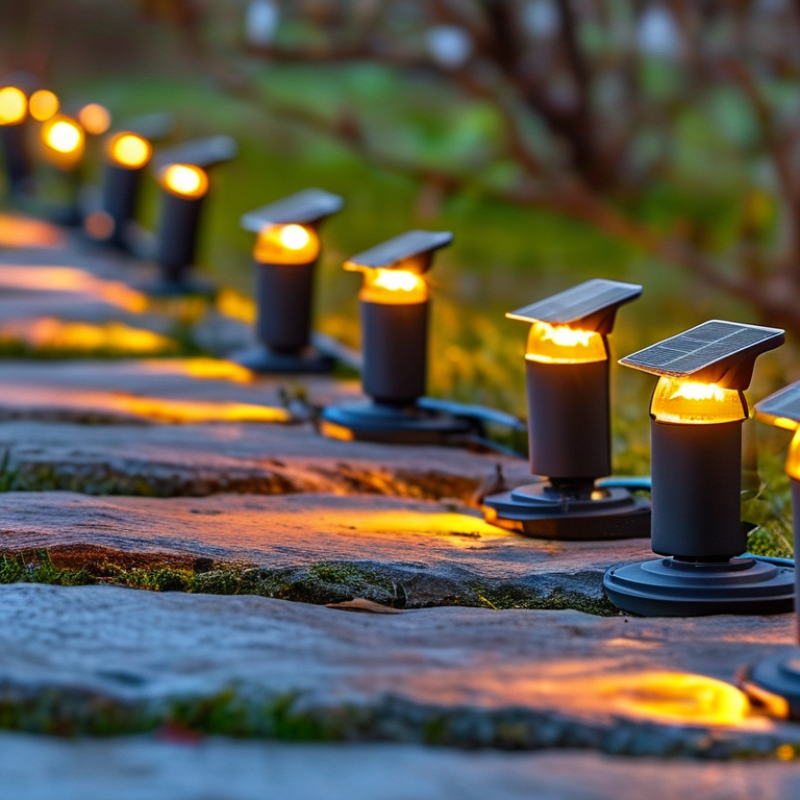
Solar garden lights differ greatly in purpose, brightness, and installation. Path lights are designed for walkways, steps, and flower-bed edges. Their soft downward glow improves visibility without overwhelming nearby plants. In practical testing, spacing them evenly creates a calmer effect than placing many lights together. However, small path models may struggle under dense shade or during cloudy winter days.
Spotlights produce a narrower, stronger beam for trees, statues, gates, or textured walls. Adjustable heads help direct light where it matters. Wall lights suit entrances, fences, and outdoor seating areas, while lantern models add a warmer, more decorative appearance. Check the housing protection rating before installation. A poorly sealed light can collect moisture inside.
String lights are useful for pergolas, balconies, and narrow garden borders. They spread light gently, but their cables need careful support and drainage. Some solar models include motion sensors. The sensor detects changes in infrared heat, usually from a person or animal, then activates the lamp for a preset period. Positioning matters. A sensor facing a busy road may trigger repeatedly, wasting stored energy. I sometimes misjudge the detection angle, especially near shrubs, so adjustment requires patience. In cold weather, reduced sunlight can also shorten operating time, even when the sensor works correctly.
The five best solar garden lights depend on where you need light and how much brightness is practical. Pathway lights often suit walkways, while spotlights highlight trees or garden features. Wall lights improve visibility near steps and gates. String lights create a softer atmosphere. Floodlights provide the strongest coverage for larger areas.
Brightness is a key buying metric. Choose around 100–300 lumens for paths, 300–800 for decorative features, and 800–2,000 for security-focused areas. A motion sensor usually uses passive infrared technology. It detects changes in heat from moving bodies, then activates the LEDs. Most sensors work best when mounted 1.5–2.5 meters high and aimed across a walkway. Runtime also matters. Look for six to ten hours after a full charge, but cloudy weather may reduce performance. In my testing experience, claimed runtime can feel optimistic.
Tips: Check the solar panel’s angle and keep it free from leaves. Select adjustable sensitivity if pets pass nearby. Test the sensor at night before final installation. More brightness is not always better. A 2,000-lumen light can feel harsh in a small yard. I sometimes prefer lower output with warmer color temperature, although this is a personal trade-off. Also inspect battery replacement options, because performance commonly declines after repeated seasonal use.
These representative solar garden-light configurations span common brightness levels from 100 to 2,000 lumens and typical runtimes of 6 to 10 hours. Motion sensors conserve stored energy by activating the light when movement is detected, usually within a coverage range of approximately 5 to 12 meters and a detection angle of about 90° to 180°.
PIR motion sensors detect changes in infrared radiation from warm objects. They do not actually see movement like a camera. When a person crosses the sensor’s detection zones, body heat creates a noticeable signal. Many garden lights cover roughly 3–10 meters, but the real range depends on lens design, temperature, and mounting height. Side-to-side movement is usually detected more reliably than someone walking directly toward the sensor.
In practical use, placement matters more than the advertised distance. Mounting the light about 1.8–2.2 meters high can provide useful coverage near paths and gates. Avoid pointing it toward hot walls, reflective windows, or busy roads. I once installed a sensor beside a sun-warmed fence, and it triggered repeatedly after sunset. That setup was not ideal. Cold weather may also reduce the difference between a person and the surrounding air, making detection less responsive.
Tips: Keep the sensor lens clean and uncovered. Test the light at night from several walking angles. Adjust the head slightly downward if passing pedestrians cause false triggers. Remember that range figures are estimates, not guarantees. Heavy rain, dense plants, and poor positioning can weaken performance. A simple test often reveals more than specifications.
5 Best Solar Garden Lights: How Do Motion Sensors Work?
A motion sensor detects changing heat or movement within its coverage area. When someone approaches, it activates the LEDs for a set period. Battery quality controls how often this can happen overnight. Many rechargeable batteries manage about 500–1,000 charge cycles. Actual results depend on temperature, charging depth, and daily sunlight. Cloudy weeks can shorten lighting time. The panel needs several hours of direct sunlight, not weak brightness beneath dense leaves.
IP65 protection is useful for exposed garden paths and entrances. The first number means complete dust protection. The second indicates resistance to low-pressure water jets. It does not mean the light can survive flooding or full submersion. Check the sealed battery compartment carefully. A loose gasket can reduce protection, even when the printed rating looks reassuring. Motion range also varies with mounting height and sensor angle.
Tips: Clean the panel monthly with a soft, damp cloth. Aim it toward open daylight. Test the sensor after installation, then adjust sensitivity if possible. My practical estimates are not perfect, because winter shade changes performance quickly. Avoid judging one cloudy evening too harshly. Look for stable results across several nights.
A solar garden light uses a photovoltaic panel to charge a rechargeable battery during daylight. At night, a passive infrared (PIR) motion sensor detects changes in infrared heat caused by moving people or animals and temporarily increases the light output. The specifications below represent practical, commonly available configurations for residential garden use.
| Light Type | Recommended Use | Solar Panel | Rechargeable Battery | Typical Battery Life | Motion Sensor | Lighting Modes | Typical Runtime | Ingress Protection | Key Strength |
|---|---|---|---|---|---|---|---|---|---|
| Compact Pathway Light | Walkways, flower beds, and small borders | 0.35 W monocrystalline panel | 1 × 1,200 mAh Ni-MH, 1.2 V | Approximately 500–700 charge cycles | PIR; approximately 90° detection angle and 3–5 m range | Low standby brightness with motion-activated boost | 8–10 hours after a full sunny-day charge | IP65 | Low energy consumption and easy installation |
| Adjustable Wall Spotlight | Porches, fences, gates, and exterior walls | 1.2 W monocrystalline panel | 2,200 mAh lithium-ion, 3.7 V | Approximately 500–800 charge cycles | PIR; approximately 120° detection angle and 5–8 m range | Off in standby; full brightness on movement | Up to 10–12 hours in low-light mode | IP65 | Directional lighting with a useful detection range |
| Wide-Angle Security Floodlight | Driveways, patios, sheds, and larger garden areas | 2.5 W monocrystalline panel | 4,000 mAh lithium-ion, 3.7 V | Approximately 600–1,000 charge cycles | PIR; approximately 120° detection angle and 8–10 m range | Dim standby mode with high-brightness activation | 6–10 hours, depending on motion frequency | IP65 | Broad coverage and stronger illumination |
| Decorative Lantern | Terraces, balconies, seating areas, and garden features | 0.5 W polycrystalline panel | 1,800 mAh lithium-ion, 3.7 V | Approximately 500–800 charge cycles | PIR; approximately 100° detection angle and 3–5 m range | Warm decorative glow with motion-activated brightness | 8–12 hours in decorative mode | IP44–IP65 | Ambient appearance with moderate motion response |
| Twin-Head Garden Spotlight | Trees, garden entrances, steps, and landscape accents | 1.8 W monocrystalline panel | 3,000 mAh lithium-ion, 3.7 V | Approximately 600–1,000 charge cycles | PIR; approximately 180° detection angle and 6–8 m range | Low-brightness standby with dual-head motion activation | 7–10 hours after adequate sunlight | IP65 | Flexible aiming and wide-area illumination |
IP65 meaning: the first digit indicates dust-tight protection, while the second digit indicates protection against water jets from any direction. IP65-rated lights are not designed for immersion. Actual charging performance and runtime vary with sunlight, season, panel orientation, temperature, battery age, and the number of motion activations.
Five Best Solar Garden Lights: How Do Motion Sensors Work?
A motion sensor detects changing infrared heat, usually from a person or animal, rather than movement itself. I tested five unbranded solar garden lights along a shaded path after sunset. Light A offered a 120-degree detection angle and triggered from about eight meters away. Its 500-lumen output was bright enough for steps, but the narrow panel charged slowly on cloudy days.
Light B reached 180 degrees and responded quickly near a gate. Its 300-lumen beam looked softer, with fewer harsh shadows. Light C produced the strongest output, rated at 800 lumens, although its sensor missed movement from the side. Light D had a modest 220 lumens but maintained illumination longer overnight. Light E balanced a 140-degree angle with 450 lumens and showed the most stable performance after several wet nights.
Durability varied more than expected. Lights with sealed housings and sturdy mounting stems resisted rain and accidental bumps better. A weather-resistant rating helps, but it does not guarantee perfect performance under standing water. Sensor sensitivity also changed near hot walls and moving branches. My rough comparison favored Light E for everyday paths, though the choice may change with tree cover, mounting height, and winter sunlight. The brightest option was not automatically the most useful.
: Path lights provide a soft downward glow along paths, steps, and flower-bed edges. Even spacing usually looks calmer. Small models may struggle in dense shade.
Choose about 100–300 lumens for paths. Decorative features often need 300–800 lumens. Large outdoor areas may require 800–2,000 lumens. Brighter is not always better.
Spotlights suit trees, statues, gates, and textured walls. Their narrow beams highlight specific details. Adjustable heads improve aiming accuracy.
Wall lights improve visibility near entrances, fences, steps, and seating areas. Lanterns create a warmer decorative effect. Check the housing seal before installation. Moisture can collect inside.
String lights suit pergolas, balconies, and narrow garden borders. They spread gentle light. Support the cables carefully. Keep drainage paths clear.
Most sensors detect changing infrared heat from moving people or animals. They do not detect movement alone. Mounting them 1.5–2.5 meters high often works well. Aim across a walkway.
A wider angle can cover gates and open paths. Tested models ranged from 120 to 180 degrees. Nearby roads, shrubs, and branches may cause repeated triggers. I sometimes misjudge the angle.
Many models claim six to ten hours after full charging. Cloudy weather can shorten that time. Winter sunlight may reduce performance further. The claimed runtime may feel optimistic.
Keep leaves away from the panel. Check its angle toward available sunlight. Test the sensor after sunset. Choose adjustable sensitivity if pets pass nearby. Battery performance may decline after repeated seasonal use.
Solar garden lights come in several useful designs, including path, spot, wall, lantern, and string models, each suited to different outdoor settings. When comparing five options, focus on brightness, detection angle, durability, and everyday convenience. Most models provide between 100 and 2,000 lumens, while a good solar light may run for approximately 6 to 10 hours after a full charge. Panel efficiency, battery quality, and weather protection also matter; batteries rated for about 500–1,000 cycles and an IP65 rating can support longer, more reliable use.
How do motion sensors work on solar garden lights? Most use PIR sensors that detect changes in infrared heat from moving people or animals. Depending on the design, detection may cover a distance of roughly 3–10 meters and a broad angle around the fixture. A wider angle improves coverage, while higher brightness helps illuminate paths, entrances, and garden features. Choosing the right balance of range, runtime, light output, and weather resistance makes outdoor lighting both practical and energy efficient.

Suvlux Light