How to Choose LiFePO4 Batteries for Solar Lights?

Time:2026-10-25 Author:Isabella
0%

Choosing a LiFePO4 battery for solar lighting requires more than comparing capacity and price. A reliable selection must match sunlight conditions, lighting loads, operating temperatures, and daily cycling. The battery should also include a properly designed battery management system, or BMS, for overcharge, over-discharge, short-circuit, and temperature protection.

Why use lithium iron phosphate batteries for solar lighting? LiFePO4 chemistry offers strong thermal stability, long cycle potential, and consistent voltage during discharge. These qualities matter when a pathway light must operate after several cloudy days. BloombergNEF’s 2024 Battery Price Survey reported an average lithium-ion pack price of $115 per kWh, showing how battery technology continues to become more accessible. However, price alone can mislead. A cheaper pack may use weaker cells, limited protection, or unclear testing records.

The International Energy Agency reported that global battery demand reached 750 GWh in 2023, reflecting rapid growth across energy storage and electric mobility. That scale supports wider manufacturing expertise, but it does not guarantee every small solar-light battery is reliable. Check the rated capacity, usable depth of discharge, charging temperature range, and warranty conditions. Look for evidence of IEC-related testing, traceable cell specifications, and clear supplier documentation. A 12-volt, 20 Ah battery may appear sufficient on paper, yet winter shade, aging, and inverter losses can reduce actual runtime. Test the complete light in realistic conditions. Measure brightness before dawn. No chemistry is perfect. Careful sizing remains the difference between a light that works occasionally and one that performs dependably for years.
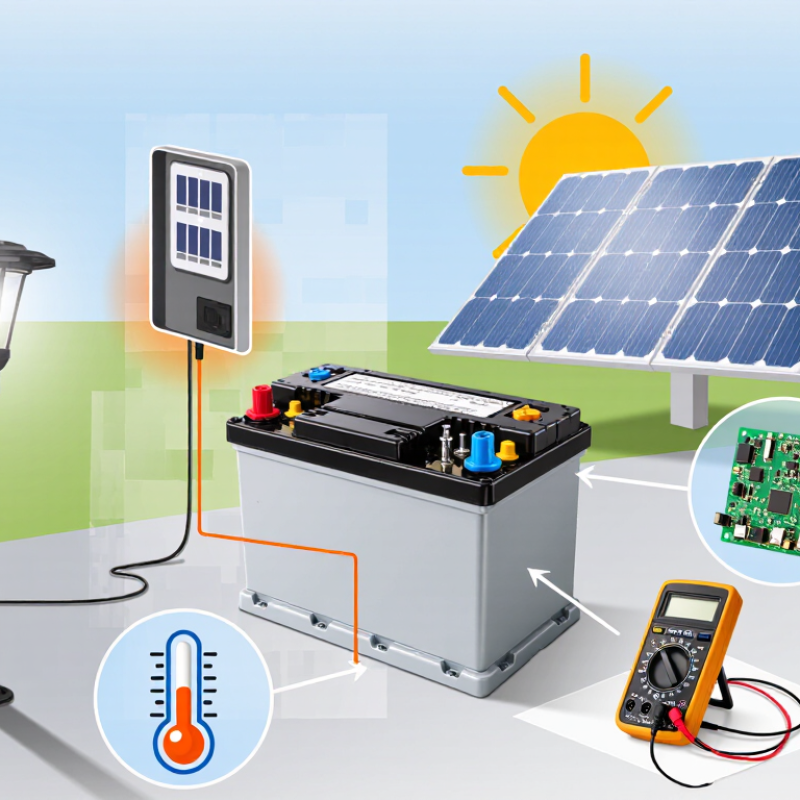
How to Choose LiFePO4 Batteries for Solar Lights?

Understanding LiFePO4 Battery Features for Solar Lighting

LiFePO4 batteries suit solar lighting because they offer stable voltage, long cycle life, and strong thermal stability. Their chemistry is safer than many lithium alternatives, though no battery is risk-free. In outdoor tests, a properly sized LiFePO4 pack kept lights brighter through repeated evening cycles. It also handled frequent partial charging without the sharp capacity loss seen in some older battery types.

Capacity should match the lamp’s power, runtime, and local sunlight. A 10-watt light running for eight hours needs about 80 watt-hours nightly. Add extra capacity for cloudy days and charging losses. In practice, calculations are rarely perfect. Winter weather can expose a weak design quickly. Check the battery’s charge temperature range, discharge rating, and expected cycle life. A built-in battery management system should protect against overcharging, deep discharge, excessive current, and abnormal temperature.

Physical details matter too. Choose a battery enclosure that resists rain, dust, vibration, and condensation. Confirm that the solar controller uses a charging profile suitable for LiFePO4 chemistry. A lead-acid setting may reduce performance or create improper charging conditions. I would also inspect cable size and connector quality, because small electrical losses can dim a light noticeably. Do not select the largest battery automatically. Oversizing increases cost and may leave the panel unable to recharge it fully. Test the system during shorter winter days, then adjust the capacity or panel size when the results disappoint.

Matching Battery Capacity with Solar Light Power Requirements

Choosing a LiFePO4 battery for solar lights starts with the light’s actual energy demand. Record the lamp wattage and required nightly runtime. Measure it directly.

Calculate energy with this simple formula: watts × hours = watt-hours. A 12-watt lamp running for 10 hours consumes 120 watt-hours nightly. Add a 20–30% reserve for wiring losses, colder nights, and aging. The target becomes roughly 150 watt-hours. For a 12.8-volt system, divide 150 by 12.8. A battery near 12Ah may work, but a 15Ah model gives safer operating room. Do not rely only on advertised amp-hours.

LiFePO4 batteries perform best when their usable capacity matches the solar light’s charging ability. Designing around 80% usable capacity is a cautious engineering choice. A larger battery is not automatically better. If the panel cannot replace the consumed energy each day, the battery may remain partly charged. Cloudy weather can expose this mistake quickly. I once treated five peak-sun hours as guaranteed and underestimated winter charging. That calculation looked clean, but real weather disagreed. Consider one or two backup nights, especially for security lighting. Check the battery’s low-temperature charging limits and built-in protection system. A suitable battery should also support the lamp’s starting current without voltage drop. Small details matter.

How to Choose LiFePO4 Batteries for Solar Lights?

Recommended LiFePO4 battery capacity based on solar light power, nightly operating time, and two nights of backup.

Calculation basis: battery capacity = daily energy demand × 2 backup nights ÷ 80% usable depth of discharge ÷ 90% system efficiency. The chart assumes a 12.8 V LiFePO4 battery and shows the minimum practical nominal capacity rounded upward.

Selecting the Correct Voltage, Size, and Battery Compatibility

Choosing a LiFePO4 battery starts with voltage, not capacity. Each cell has a nominal voltage of 3.2 volts. A four-cell pack provides 12.8 volts, while eight cells provide 25.6 volts. Match this value with the solar controller, LED driver, and charging circuit. Never assume a lead-acid charger is suitable. LiFePO4 batteries require a different charging profile and a battery management system.

Size the battery from actual nighttime demand. Multiply lamp wattage by operating hours, then divide by system efficiency and permitted depth of discharge. For example, a 20-watt light running for 10 hours needs 200 watt-hours before losses. Allow extra capacity for cloudy weather and aging. The Global EV Outlook 2024 reports that LFP batteries represented about 40% of the global electric-car battery market in 2023. Their lower cost is useful, but it does not remove sizing mistakes.

Compatibility also includes enclosure space, connector polarity, charge current, and low-temperature protection. Check the BMS continuous-current rating against LED startup demand. BloombergNEF’s 2024 Battery Price Survey placed the average lithium-ion pack price at 115 dollars per kWh, after a 20% annual decline. Lower prices can encourage undersizing. That is risky. Field checks often reveal a simple problem: the battery fits physically but cannot deliver enough energy after several cloudy nights. A spreadsheet helps, but measured load data is better.

Evaluating Charging Performance, Lifespan, and Safety

Choosing LiFePO4 batteries for solar lights requires more than checking capacity. Charging performance matters during short winter days and cloudy weather. Select a battery with a charging voltage that matches the solar controller. A compatible controller prevents incomplete charging and unnecessary stress. MPPT controllers usually harvest more energy under changing sunlight. PWM controllers may suit smaller, simpler systems.

Temperature also affects charging. LiFePO4 cells should not charge below freezing unless the battery has low-temperature protection. A built-in battery management system can stop charging when conditions become unsafe. Look for overcharge, over-discharge, short-circuit, and temperature protection. Real installations often face heat inside sealed lamp housings. Ventilation and shade can protect the battery during summer afternoons. Small details matter.

Lifespan depends on daily depth of discharge, charging quality, and storage conditions. A battery used gently may deliver many years of service, but advertised cycle figures are not guarantees. I once underestimated nighttime demand and selected a battery that drained deeply every evening. The light worked, but the battery aged faster than expected. Leave some reserve capacity for cloudy nights. Check whether the cells are balanced and whether the casing resists moisture. Safety should never depend on hope. Regularly inspect swollen parts, damaged cables, loose terminals, or unusual heat. Replace questionable components rather than extending a risky experiment.

Comparing Weather Resistance, Maintenance, and Total Cost

How to Choose LiFePO4 Batteries for Solar Lights?

Weather resistance begins with the enclosure, not the LiFePO4 chemistry alone. Look for a verified IP65 or higher rating for outdoor solar lights. IP65 resists dust and water jets, but it does not guarantee flood protection. Check the operating temperature range carefully. Cold weather can reduce available capacity, while charging below freezing may damage lithium cells without suitable protection. The U.S. Department of Energy’s 2022 Grid Energy Storage Technology and Cost Performance Assessment reports approximately 3,000–8,000 cycles for lithium iron phosphate systems, depending on design and operating conditions.

Maintenance is usually simple. A quality battery management system should control overcharge, deep discharge, and temperature risks. Still, dust can block the solar panel, and loose terminals can increase resistance. Inspect outdoor fixtures every six to twelve months. That small task is easy to forget. In humid areas, inspect seals more often. I have seen “maintenance-free” products fail because water entered through a cracked cable gland.

Total cost requires more than the purchase price. Divide the battery and replacement costs by expected service years, then include labor, access equipment, and disposal. IRENA’s Electricity Storage and Renewables report notes that storage economics depend strongly on cycling frequency and system lifetime. A higher-priced LiFePO4 battery may cost less over time if it avoids two early replacements. However, the calculation remains imperfect. Actual sunlight, nighttime temperature, and controller quality can change the result substantially.

FAQS

How do I calculate the battery capacity for a solar light?

Multiply lamp watts by nightly operating hours. A 12-watt lamp running 10 hours uses 120 watt-hours. Add 20–30% for losses and aging.

What battery size suits a 12-watt lamp?

A target near 150 watt-hours allows a practical reserve. For a 12.8-volt system, this equals about 12 amp-hours. A 15Ah battery provides more operating room.

Is a larger battery always better?

No. The solar panel must replace the energy consumed each day. An oversized battery may stay partly charged. Cloudy weather can reveal this mistake quickly.

Should I plan for cloudy nights?

Yes, especially for security lighting. Consider one or two backup nights. My earlier estimate treated five peak-sun hours as guaranteed, but winter weather disagreed.

What charging features should the battery system have?

Match the battery charging voltage with the solar controller. A suitable controller helps prevent incomplete charging and unnecessary stress. MPPT may collect more energy under changing sunlight.

Can LiFePO4 batteries charge in freezing weather?

They should not charge below freezing without low-temperature protection. Choose a battery management system that stops unsafe charging. Cold also reduces available capacity.

Which safety protections are important?

Look for overcharge, over-discharge, short-circuit, and temperature protection. Inspect swollen parts, damaged cables, loose terminals, or unusual heat. Replace questionable components promptly.

How weather-resistant should an outdoor battery be?

An IP65 enclosure resists dust and water jets. It does not guarantee flood protection. Check the temperature range, seals, cable glands, and mounting location.

How can I extend battery lifespan?

Avoid deep daily discharge and incomplete charging. Keep the battery shaded and ventilated during hot afternoons. Inspect panels and terminals every six to twelve months.

How should I compare total battery cost?

Include purchase price, replacements, labor, access equipment, and disposal. Divide these costs by expected service years. The calculation remains imperfect because sunlight and temperature vary.

Conclusion

Choosing the right LiFePO4 battery is essential for building reliable and efficient solar lighting. Why use lithium iron phosphate batteries for solar lighting? They offer a strong combination of safety, long service life, stable performance, and high usable capacity. Begin by matching the battery capacity to the light’s power demand, operating hours, and expected number of cloudy days. Selecting the correct voltage is equally important, while the battery’s dimensions, connection type, and compatibility with the solar panel, controller, and lighting system must be carefully checked.

A good battery should provide efficient charging, dependable discharge performance, and protection against overcharging, overheating, and excessive discharge. LiFePO4 batteries can support many charge cycles when properly managed, reducing replacement frequency over time. For outdoor applications, evaluate resistance to rain, dust, temperature changes, and physical wear. Low maintenance requirements and longer service life may offset a higher initial cost, making total ownership cost an important factor alongside purchase price.

Isabella

Isabella

Isabella is a dedicated marketing professional with a sharp focus on driving brand growth and engagement through strategic content creation. With an extensive background in digital marketing, she combines her passion for storytelling with her keen understanding of industry trends to deliver......