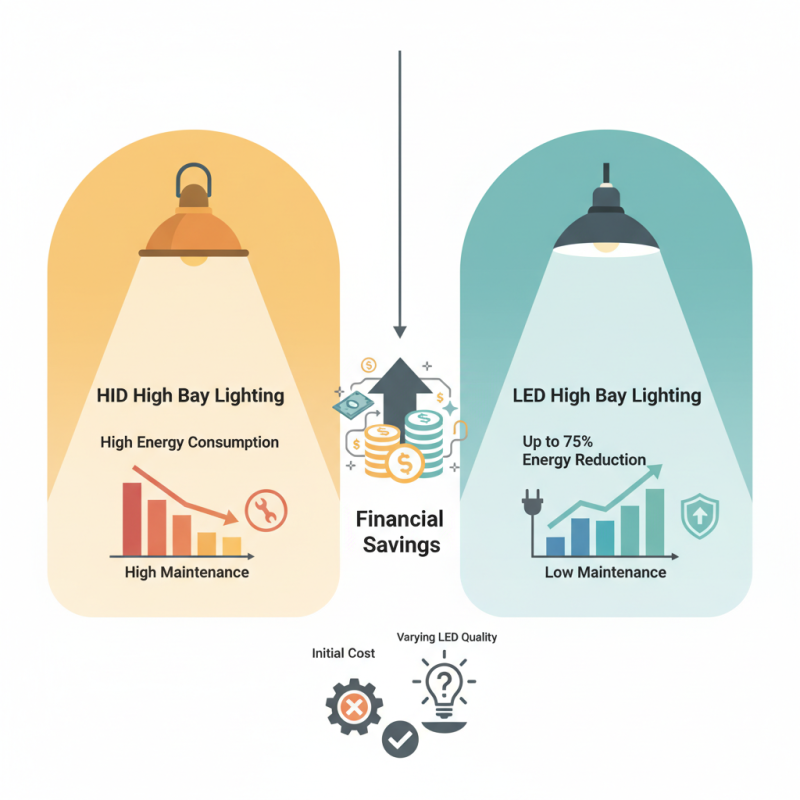
In recent years, the debate surrounding high bay lighting has intensified, particularly the shift from HID to LED systems. A report by the U.S. Department of Energy indicates that LED lighting can reduce energy consumption by up to 75%. This drop in energy use is just one reason to explore the question, "Why should I switch from HID to LED high bay lighting?"
Industry expert Dr. Emily Carter emphasizes the financial advantages of this transition. She states, "Investing in LED technology not only cuts energy costs but can significantly lower maintenance expenses." This insight is crucial, especially for facilities looking to optimize their operational budgets.
However, the transition is not without challenges. Some may face initial costs that can be daunting. Additionally, varying quality in LED products may lead to overspending on inferior options. Keeping these factors in mind is vital for making an informed decision about lighting upgrades. Ultimately, weighing the long-term benefits against short-term expenditures will guide you in deciding whether to make the switch.
Factors to Consider When Evaluating High Bay Lighting Options
When evaluating high bay lighting options, the type of fixtures can significantly impact your facility's performance. One major difference lies between HID and LED technologies. HID lights may be more affordable initially, but they can also lead to higher maintenance costs. Their lifespan is typically shorter compared to LED. This means more frequent replacements, which can disrupt operations and incur additional expenses.
Consider your energy consumption as well. LED high bay lights are known for their energy efficiency. They consume less power while providing the same amount of light. Over time, this can lead to substantial savings on electricity bills. However, the upfront investment for LEDs can be higher. You must weigh these factors against your budget and long-term goals. It's a delicate balance, one that requires careful thought.
Another consideration is the quality of light. LED lights offer better color rendering and consistent brightness, promoting a safer work environment. In contrast, HID fixtures often have a warmer glow, which may not be ideal for all applications. Keep in mind that changing lighting can also impact employee morale. It’s vital to consider the human aspect when making your decision. The right lighting choice can elevate productivity and satisfaction in your workplace.
Comparison of HID and LED High Bay Lighting Characteristics
When considering a switch from HID to LED high bay lighting, understanding their characteristics is crucial. HID lights typically generate more heat, which can be a downside in enclosed spaces. In contrast, LED lights operate at cooler temperatures. A report from the U.S. Department of Energy indicates that LEDs can be up to 80% more efficient than HID lights. This significant reduction in energy consumption can lead to substantial long-term cost savings, particularly in industrial settings.
The color rendering index (CRI) is another key comparison point. HID lights generally provide a lower CRI, often around 70, while many LED options exceed 90. High CRI means better color accuracy, which is essential in environments where precise color differentiation is critical. However, the initial cost to switch to LED might deter some facilities. The upfront investment can lead to hesitation, even though the long-term benefits are robust.
Moreover, LED fixtures have a longer lifespan, often exceeding 50,000 hours, compared to around 20,000 hours for HID. This lifespan means fewer replacements and reduced maintenance costs over time. Despite their advantages, transitioning to LED lights necessitates careful consideration of factors like existing fixtures and light distribution. Understanding these elements helps in making an informed decision on lighting upgrades.
Energy Efficiency: Cost Savings and Environmental Impact
Switching from HID to LED high bay lighting can offer significant energy efficiency benefits. LEDs consume less power, translating to lower energy bills. They convert more energy into light rather than heat, leading to cost savings over time. This efficiency also reduces the environmental impact by decreasing the carbon footprint associated with energy use.
When considering this switch, assess your current setup. Evaluate how much energy your HID lights consume. Then, compare this with the expected consumption of LED fixtures. Understanding these numbers can be enlightening. Shorter lifecycles of HID bulbs can lead to more waste and higher costs.
Tips:
1. Calculate the total cost of ownership—including energy use and replacement costs.
2. Review your facilities for compatibility with LED technology. Oddly shaped spaces might require customized solutions.
Familiarize yourself with various installation options. This knowledge can help you make more informed decisions.
Lighting Quality: Brightness, Color, and Distribution Differences
When considering a switch from HID to LED high bay lighting, it's essential to evaluate lighting quality.
Brightness is a crucial factor. LEDs typically offer higher lumens per watt compared to HID.
This efficiency results in brighter spaces while consuming less energy. You might notice that shadows can be reduced significantly with LED lighting.
Color temperature is another vital aspect. LEDs are available in various color temperatures.
This range can influence the ambiance of a space. Warmer tones can create a welcoming atmosphere, while cooler temperatures enhance focus and alertness. Think about the environment where the lights will be used.
Distribution of light is also key. LEDs provide more uniform light distribution compared to HID.
This means fewer dark spots and more consistent lighting across the area. It’s worth noting that not all installations will benefit equally.
Testing a small area first may help in making the right decision.
Tips: Measure the current brightness levels in your space. Compare those with LED options.
Consider conducting an experiment by replacing just a few fixtures initially. Always consult lighting professionals for tailored advice.
They can help identify potential pitfalls in transition.
Installation and Maintenance: Process and Long-term Considerations
Switching from HID to LED high bay lighting involves key installation and maintenance considerations. The initial installation process for LED fixtures may require retrofitting existing structures. This can take additional time and effort. Make sure your electrical system supports the new lights. Hiring professionals might be necessary for this.
When it comes to maintenance, LED lights generally require less frequent replacement than HID bulbs. However, you may need to consider the costs of disposing of old fixtures. LED technology can experience performance issues over time, such as dimming or color shifts. Regular audits can help identify these problems early.
Long-term considerations include energy savings and lifespan. While LEDs have higher upfront costs, they offer significant savings on electricity bills. Improved efficiency also means lower carbon footprints. Evaluating these factors is essential in making a well-informed decision. Transitioning to LED may prove beneficial, but careful planning is crucial for a smooth shift.
FAQS
: HID lights produce more heat, which can be problematic in tight spaces. LEDs operate cooler, enhancing safety.
LEDs can be up to 80% more efficient than HID lights. This can lead to significant savings in energy costs over time.
HID lights typically have a lower CRI around 70, while many LEDs exceed 90, offering better color accuracy.
LEDs often exceed 50,000 hours, while HID lights last about 20,000 hours. This means fewer replacements are needed.
The initial cost to switch can be a barrier, despite long-term energy savings and operational benefits.
LEDs provide higher lumens per watt, resulting in brighter spaces. They also reduce shadows significantly.
LEDs come in various color temperatures, affecting ambiance. Warmer tones are inviting, while cooler tones enhance alertness.
LEDs offer more uniform light distribution, minimizing dark spots. However, effectiveness may vary by installation type.
Yes, experiment by replacing a few fixtures first. This helps gauge performance in your specific environment.
It's best to consult lighting professionals. They can help identify pitfalls and provide tailored advice for your needs.
Conclusion
When considering whether to switch from HID to LED high bay lighting, several key factors should be evaluated. One of the primary concerns is energy efficiency, as LED lights offer significant cost savings and reduced environmental impact compared to traditional HID systems. Additionally, the quality of lighting provided by LEDs surpasses that of HIDs, with better brightness, color rendering, and light distribution.
Another critical aspect to consider is the installation and maintenance requirements. LED high bay lighting typically involves a simpler installation process and lower long-term maintenance costs due to their longer lifespan. Overall, the question "Why should I switch from HID to LED high bay lighting?" is answered through the advantages in energy savings, lighting quality, and ease of maintenance, making LEDs a compelling choice for modern lighting solutions.
 Suvlux Light
