High-power LED sports lights have transformed athletic fields and arenas. However, their efficiency hinges on effective heat dissipation. "Why is heat dissipation critical for high-power LED sports lights?" This question resonates deeply in the industry. According to Dr. Emily Chen, a leading expert in LED technology, “Without proper heat management, even the best LED lights will fail prematurely.”
Heat management is not just a technical issue. It's about performance, safety, and longevity. When LEDs generate light, they also produce heat. Excess heat can lead to dimming, color shifts, and ultimately, failure. The right cooling solutions can extend lamp life and enhance brightness. For instance, a well-designed heat sink can dissociate 20% more heat, allowing lights to perform better in intense conditions.
Moreover, the need for robust heat dissipation is often underestimated. Many manufacturers overlook this aspect. They focus on brightness and energy savings but neglect heat management. This can lead to disappointing results. Therefore, understanding "Why is heat dissipation critical for high-power LED sports lights?" is essential for making informed decisions. Addressing heat effectively not only protects the investment but also ensures optimal sporting experiences.
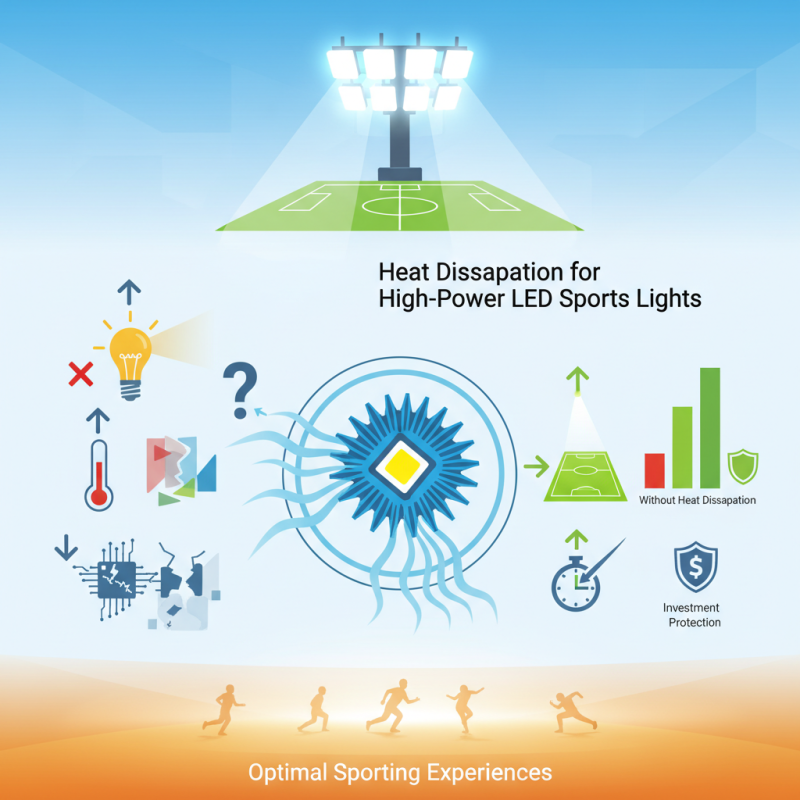
Heat dissipation plays a critical role in high power LED sports lights. These lighting solutions often operate at elevated temperatures, which can significantly impact performance and lifespan. Research indicates that improper heat management can reduce LED efficiency by up to 30%. To maximize output and maintain quality, effective thermal management systems are essential.
LEDs convert electrical energy into light, but approximately 20% of the energy is emitted as heat. This excess heat can lead to thermal runaway, damaging the LED components. A report from the International Energy Agency highlights that managing temperature can extend LED lifespan significantly—sometimes exceeding 50,000 hours with proper cooling.
Moreover, different cooling techniques come into play, such as heat sinks and thermal interface materials. These methods can vary in effectiveness. Some systems may not provide adequate dissipation, causing overheating in high-demand scenarios. It is crucial to analyze and adapt thermal strategies based on the specific application. Design flaws can trap heat, reducing light efficiency and unexpectedly increasing maintenance costs.
This chart illustrates the relationship between LED power output (in watts) and corresponding heat dissipation efficiency (in degrees Celsius). Effective heat dissipation is crucial to maintain performance and prolong the lifespan of high power LED sports lights.
Effective cooling systems are vital for high power LED sports lights. High-intensity LEDs generate significant heat. Without proper heat dissipation, these lights risk thermal overload. This can lead to reduced efficiency and a shorter lifespan. According to a report from the Department of Energy, LEDs can lose over 30% performance if overheating occurs.
Heat sinks and fans play a crucial role in maintaining optimal operating temperatures. Effective heat management not only sustains performance but also enhances light output. In competitive settings, every lumen counts. Case studies show that well-designed cooling systems can extend LED lifespan by up to 50%. This is essential for outdoor sports venues.
**Tips:** Choose fixtures with integrated heat sinks. Regularly check for dust buildup in fan areas. These small actions can make a significant difference. Investing in quality cooling systems pays off in the long run. Proper maintenance ensures that lights perform at their best during crucial moments in sports events.
Effective heat management is critical in LED sports lighting. High power LEDs produce significant heat, which can compromise their performance and lifespan. The excessive heat leads to reduced brightness and can even damage the LEDs over time. According to a report from the International Energy Agency (IEA), improper heat management can reduce LED lifespan by up to 50%.
Common techniques include heat sinks, active cooling, and thermal interface materials. Heat sinks absorb and dissipate heat from the LED. They come in various shapes and sizes, allowing for optimal surface area contact. Active cooling systems, like fans, enhance heat dissipation by promoting airflow around the LED. Thermal interface materials help transfer heat effectively, improving thermal conductivity between the LED and heat sinks.
Tips: Regular maintenance of cooling systems enhances performance. Ensure that heat sinks are free from dust. Monitor LED temperature regularly to optimize efficiency. Implementing these techniques will help maximize the brightness and longevity of LED sports lights.
Heat management is crucial for the performance of high power LED sports lights. Excessive heat can negatively impact LED efficiency, leading to lower light output. LEDs convert electrical energy into light, but they also produce heat. If the heat is not dissipated properly, it can raise the junction temperature. Higher temperatures shorten the lifespan of LEDs significantly.
When LEDs operate at elevated temperatures, their color shifts. This shift can compromise the consistent lighting quality needed in sports environments. Inadequate heat dissipation reduces the reliability of the lighting system. This results in frequent replacements and increased maintenance costs. Effective thermal management systems are vital for ensuring that LEDs perform optimally over time.
The design of heat sinks and the choice of materials play a significant role in managing heat. Poor designs can lead to hotspots, which further harm LED longevity. Feedback from users often reveals problems that stem from these inadequate designs. Addressing thermal issues is not just about improving performance; it’s also about enhancing the user experience. Every detail matters, from component selection to overall fixture design. These factors directly affect the effectiveness of the lighting system in sports applications.
| Parameter | Optimal Value | Impact of Heat | Consequences of Poor Heat Dissipation |
|---|---|---|---|
| Operating Temperature | -20°C to 50°C | Increased temperature can reduce efficiency | Shorter lifespan and dimming of lights |
| Thermal Resistance | Low Thermal Resistance < 3°C/W | Efficient heat transfer from LED to environment | Increased heat buildup, potential failure |
| Luminous Flux | 100-150 lumens/W | Heat can decrease luminous output | Suboptimal lighting, increased energy use |
| Heat Sink Efficiency | >85% | Critical for maintaining performance | Reduced performance and efficiency loss |
Effective heat dissipation is crucial for high-power LED sports lights. When LEDs operate, they generate heat. Excessive heat can cause performance issues. It can reduce the lifespan and efficiency of the fixtures. Reports indicate that improper heat management can decrease LED lifespan by up to 50%. This underscores the need for effective thermal design.
Designing for heat dissipation involves several best practices. Utilizing materials with high thermal conductivity is vital. Aluminum and copper are common choices. They help transfer heat away from the LED chips efficiently. Heat sinks are also essential. They increase surface area, allowing for better airflow and heat release. The arrangement of LEDs in the fixture can impact thermal performance. A well-thought-out layout minimizes hot spots and ensures even heat distribution.
Active cooling methods may be necessary in certain high-power applications. Fans or liquid cooling can enhance heat dissipation. However, these solutions should be evaluated for added complexity and maintenance needs. Monitoring temperature is critical for ongoing performance. Sensors can provide real-time feedback, adjusting operations to prevent overheating. Adopting a proactive approach to thermal management can transform LED sports lighting.
: Heat management is crucial because excessive heat reduces LED performance and shortens their lifespan significantly.
Improper heat management can reduce LED lifespan by up to 50% and cause lower brightness levels.
Common techniques include heat sinks, active cooling systems, and thermal interface materials to dissipate heat effectively.
Heat sinks absorb heat from the LED and dissipate it into the environment, enhancing performance via optimal surface area.
Active cooling systems, like fans, promote airflow and improve heat dissipation, which is essential for LED efficiency.
Thermal interface materials improve heat transfer between LEDs and heat sinks, increasing thermal conductivity and efficiency.
Regularly check for dust on heat sinks and monitor LED temperatures to optimize performance and efficiency.
Elevated temperatures can cause color shifts in LEDs, jeopardizing the consistent lighting quality necessary for sports environments.
The design of heat sinks and material choices are essential; poor designs lead to hotspots that harm LED longevity.
User feedback reveals thermal issues stemming from inadequate designs and helps improve overall performance and user experience.
Heat dissipation is critical for high-power LED sports lights due to the significant amounts of heat generated during operation. Effective cooling systems are vital to ensure that these lights maintain optimal performance and longevity. Understanding how heat affects LED performance reveals that excessive temperatures can lead to reduced efficiency, color shifting, and eventually, premature failure of the fixtures.
Common heat management techniques, such as heat sinks, active cooling, and thermal management materials, play a crucial role in dissipating heat. Implementing best practices in designing heat dissipation systems not only enhances the reliability of LED lights but also ensures they operate at their full potential even in demanding sports environments. Thus, understanding "Why is heat dissipation critical for high-power LED sports lights?" is fundamental for achieving high performance and durability in sports lighting applications.

Suvlux Light