Outdoor lighting is essential for security, ambiance, and navigation. However, it must endure various environmental factors. Understanding durability is key. Therefore, "What are the IP ratings for waterproof outdoor lighting?" becomes a critical question for homeowners and businesses alike. IP ratings help gauge the protection from water and dust intrusion.
According to a report by the Lighting Research Center, nearly 80% of outdoor lighting failures relate to inadequate waterproofing. These failures can lead to costly repairs. The International Electrotechnical Commission (IEC) classifies IP ratings: for instance, an IP65 rating promises strong protection against dust and low-pressure water jets. This means fixtures with these ratings can withstand rain without compromising safety.
However, not all outdoor settings require the same IP rating. Factors such as location and weather conditions should influence choices. Some may overestimate their needs and purchase more than necessary. This highlights the importance of understanding specific environment requirements. Selecting appropriate lighting is not merely a decision based on aesthetics; it is about ensuring longevity and functionality under various conditions.
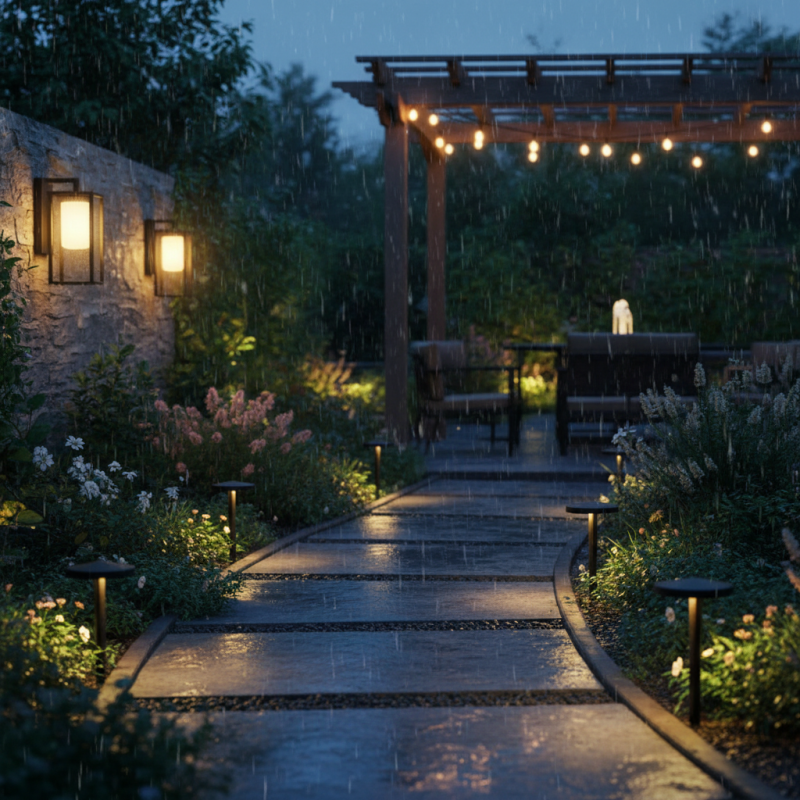
Ingress Protection (IP) ratings are crucial for understanding how well outdoor lighting fixtures can withstand environmental factors. These ratings are defined by the international standard IEC 60529. They indicate the level of protection against solids and liquids. IP ratings consist of two digits. The first digit represents protection against solid objects. The second digit indicates water resistance. For example, an IP65 rating means complete dust protection and water jets from any direction.
Common IP ratings for outdoor lights include IP65, IP67, and IP68. An IP67 rating suggests that the fixture can withstand temporary submersion in water. A study by the Lighting Research Center noted that fixtures with higher IP ratings tend to have longer lifespans in harsh conditions. The durability of these products significantly impacts maintenance costs. Therefore, selecting fittings with the correct IP rating is essential for prolonged performance. However, not all environments require high ratings. In milder climates, lower-rated fixtures may suffice.
Choosing the right IP rating requires considering the environment. Outdoor lighting may face rain, dirt, or snow. Misjudging the IP rating can lead to premature fixture failure. It’s vital to assess where and how the fixture will be used. Some lighting applications may not need extreme protection. This can lead to cost savings without sacrificing function. However, opting for too low a rating could result in repairs or replacement. Thus, it is a balance of performance and investment.
This bar chart represents the various IP ratings for waterproof outdoor lighting, indicating the level of ingress protection against dust and water. A higher value represents better protection.
Understanding the Ingress Protection (IP) code is essential when choosing waterproof outdoor lighting. The IP code consists of two digits. The first digit rates protection against solid objects, while the second digit indicates protection against liquids. For instance, an IP65 rating means that the light is dust-tight and can withstand water jets.
Many lighting products boast high IP ratings, but it's crucial to match the rating to your environment. Areas exposed to heavy rain or snow require higher ratings, such as IP66 or IP67. According to a recent industry report, about 60% of outdoor lighting failures stem from inadequate IP ratings. This highlights the importance of selecting the right fixture.
**Tip:** Always examine the lighting’s IP rating before installation. Higher ratings can prevent recurrence of moisture damage.
Not all environments are the same. Consider any potential exposure to debris, chemicals, or extreme temperatures. Even an IP68 rated light may fail in harsh conditions if not properly installed.
**Tip:** Regularly check your outdoor lighting for signs of wear or potential leaks. This can extend the life of your fixtures.
| IP Rating | Protection Against Solid Objects | Protection Against Liquids | Common Applications |
|---|---|---|---|
| IP65 | Dust-tight | Water jets from any direction | Outdoor flood lights, garden lights |
| IP67 | Dust-tight | Immersion in water up to 1 meter | Underwater pool lighting, outdoor wall sconces |
| IP68 | Dust-tight | Continuous immersion in water beyond 1 meter | Submersible lights, fountains |
| IP54 | Limited dust ingress | Protected against splashing water | Outdoor lighting in covered areas |
When selecting outdoor lighting, understanding IP ratings is essential. The IP (Ingress Protection) rating indicates how resistant a fixture is to water and dust. For outdoor lighting, common ratings include IP65, IP66, and IP67. A fixture with an IP65 rating is dust-tight and protected against water jets. According to a recent industry report, about 80% of outdoor lighting failures relate to inadequate water resistance.
IP66 fixtures withstand heavy seas and powerful water jets. This rating is suitable for coastal areas or locations with heavy rain. However, IP67 rated lights can endure immersion in water up to 1 meter for 30 minutes. This level is often preferred for areas prone to flooding. It’s important to assess local weather conditions when selecting lighting.
While choosing the right IP rating is critical, many overlook the installation process. Poor installation can render even high-rated fixtures ineffective. Moreover, regular maintenance is key to prolonging their lifespan. A report from the Lighting Industry Association shows that 25% of outdoor lighting issues stem from neglecting upkeep. A proactive approach will ensure optimal performance and durability.
When selecting waterproof outdoor lighting, understanding IP ratings is essential. The Ingress Protection (IP) code consists of two numbers. The first number indicates the level of dust resistance, while the second shows waterproofing. Higher numbers mean better protection. For example, an IP65 rating is dust-tight and resistant to water jets. This rating ensures functionality in rain or splashes.
Several factors influence these ratings. Environmental conditions play a significant role. For instance, exposure to chemicals or extreme temperatures can affect a light fixture's integrity. Installation height also matters; lights installed lower may be more exposed to water and debris. Additionally, the design of the housing, including seals, affects how well the fixture resists dust and moisture. Manufacturers often overlook these aspects, leading to future failures.
Buyers should not solely rely on IP ratings. Real-world performance can differ from laboratory tests. Installation quality is critical. Poor sealing or incorrect mounting can lead to moisture ingress. Ultimately, assessing IP ratings requires a comprehensive understanding of both the specifications and practical applications.
When choosing outdoor lighting, the IP rating is crucial. The Ingress Protection (IP) code indicates the degree of protection against dust and water. For outdoor environments, selecting the right IP rating can impact the longevity and reliability of your lighting solutions.
In areas exposed to heavy rain or snow, an IP rating of at least IP65 is recommended. This rating means the fixture is dust-tight and can withstand low-pressure water jets. According to a recent industry report, properly rated outdoor lights last 30% longer than those with inadequate protection. For moderate conditions, IP44 may suffice, offering limited protection against splashes.
Tips: Always consider the specific environment. For coastal areas, higher ratings like IP67 or IP68, which protect against temporary immersion, are advisable. Installations near pools or water features also demand higher ratings due to increased moisture exposure.
Choosing fixtures with too low an IP rating may lead to frequent replacements. Even higher-rated lights can fail if poorly installed. Regular checks and maintenance are essential for ensuring they function well over time.
: IP ratings indicate protection levels against dust and water for outdoor lighting fixtures.
IP ratings consist of two digits; the first digit shows solid protection, and the second shows liquid resistance.
An IP65 rating ensures complete dust protection and can withstand water jets from all directions.
Choosing the right IP rating prevents premature fixture failure and reduces maintenance costs in harsh environments.
Yes, in milder climates lower ratings may work. However, avoiding too low a rating is crucial to prevent future repairs.
Environmental conditions, installation height, and housing design influence the effectiveness of IP ratings in real-world situations.
Poor installation, like inadequate sealing, can lead to moisture ingress, compromising even high-rated fixtures.
Always check the IP rating and consider the specific environmental conditions the fixture will face in use.
Not necessarily. Match the rating to the environment. Overestimating needs can increase costs unnecessarily.
Regular checks for wear or leaks are essential to prolong the life of your outdoor lighting fixtures.
In exploring the question, "What are the IP ratings for waterproof outdoor lighting?", it becomes essential to understand the concept of Ingress Protection (IP) ratings. These ratings provide insights into the ability of lighting fixtures to withstand dust and water ingress. The IP code consists of two digits: the first indicates the level of dust protection, while the second signifies water resistance, helping consumers make informed decisions based on their specific outdoor environment.
Common IP ratings for outdoor lighting range from IP65 to IP68, indicating varying degrees of protection suitable for different settings, from residential patios to industrial areas. Factors such as environmental exposure and intended use significantly influence the appropriate IP rating needed for optimal performance and longevity. Ultimately, selecting the right waterproof lighting involves considering these ratings to ensure durability and reliability in outdoor applications.

Suvlux Light