In 2026, many cities noticed an unusual phenomenon. LED street lights began to change colors, turning purple or blue. This has sparked curiosity and concern among residents. People are asking, “Why are LED street lights turning purple or blue?” Understanding this issue is critical for urban planning and public safety.
Various factors contribute to these color changes. One explanation is the aging of LED fixtures, which can alter their light emission. Another reason may involve the interaction of LEDs with environmental conditions. For instance, humidity and temperature could influence the light’s color. However, professionals in the field urge caution. Not all blue or purple lights are a cause for alarm.
This color shift presents both aesthetic and functional questions. While some may find the purple hue intriguing, others feel it disrupts the nighttime environment. City planners face a challenge: balancing modernization with community needs. It seems improvements are needed in the technology used in street lighting. Collectively, we must reflect on how urban lighting impacts our lives, ensuring safety and preserving community character.
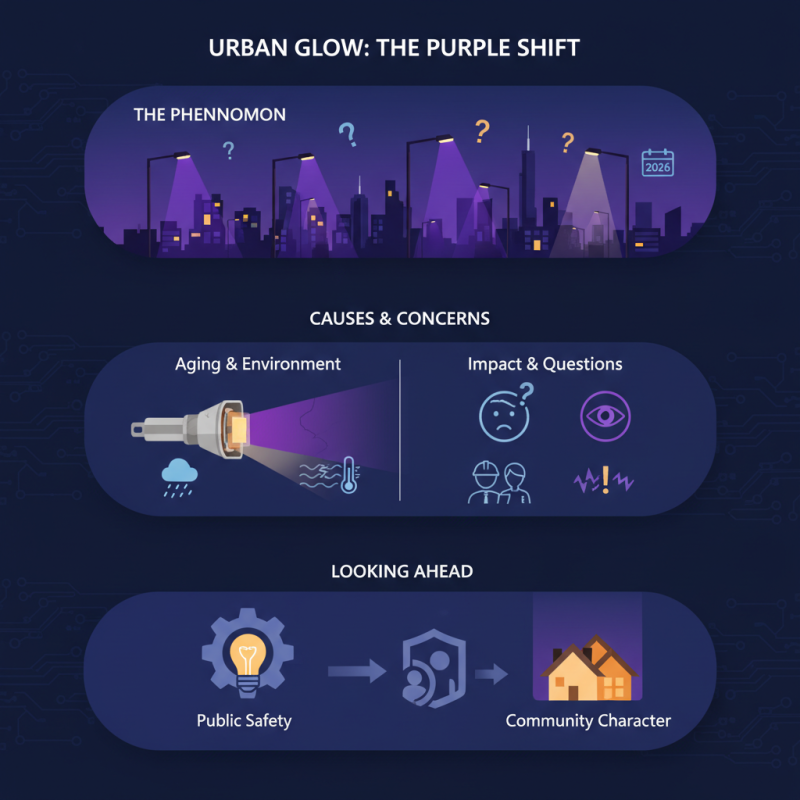
The phenomenon of LED street lights turning purple or blue by 2026 raises significant questions. Multiple factors are contributing to this color shift. One major element is the degradation of phosphor materials. Over time, these materials can lose their effectiveness, resulting in an unintended color shift in emitted light. This degradation can occur due to environmental conditions like temperature and humidity.
Another important aspect includes manufacturing processes. Variations in the quality of LED chips can lead to inconsistencies in color output. Some chips may be more affected by aging factors, which can cause an increase in cooler tones over a period. Additionally, many cities are choosing to prioritize energy efficiency over color accuracy, leading to a broader acceptance of cooler LED lights.
Public perception is also evolving. Some citizens appreciate the modern aesthetic of blue-toned lighting, while others express concerns about visibility and safety. As we navigate these changes, it is critical to evaluate the implications of this color shift on urban environments. Community feedback remains an essential part of addressing these issues, highlighting the ongoing need for dialogue and innovation in street lighting solutions.
The shift to LED street lights has transformed urban lighting. However, a curious phenomenon is emerging: the lights sometimes emit a purple or blue hue. This color change can be attributed to the high power LEDs used in these systems. These advanced lighting options can enhance visibility and safety but cause unexpected visual effects.
High power LEDs operate at higher color temperatures. This can alter not just the appearance but also the perception of the surrounding environment. Some people find the blue light distracting or harsh. Studies show that these lights can affect mood and comfort levels. They may evoke feelings of unease or disorientation for some individuals. This prompts a need for further research into the psychological effects of such lighting.
It's essential to consider the balance between energy efficiency and the human experience. Cities need to be aware of the impact on residents. Even though these LEDs reduce energy consumption, their color may not suit every area. Ensuring optimal design requires engaging with the community for feedback. Addressing these potential drawbacks is crucial as urban lighting evolves.
This chart illustrates the changing color temperature of LED street lights from 2020 to 2026. As high-power LEDs become more prevalent, the shift towards cooler (blue/purple) color temperatures can be observed, potentially impacting public perception and urban aesthetics.
The transition to LED street lights has been remarkably beneficial, but issues have emerged. One concerning pattern observed in 2026 is the color shift of these lights. Many are turning purple or blue. This phenomenon is linked to phosphor degradation in LED technology.
Phosphors are essential in converting the light emitted by LEDs. Over time, exposure to various environmental conditions can affect their stability. Factors such as temperature, humidity, and UV exposure play significant roles in this degradation process. Once the phosphor layer deteriorates, the light output changes color, often resulting in unwanted hues.
This deterioration raises questions about the long-term reliability of LED street lighting. Municipalities may need to evaluate their lighting solutions more critically. Regular maintenance and monitoring could help mitigate these issues. Understanding the science behind phosphor degradation is crucial for improving LED technologies. Urban planners must consider these factors to ensure sustainable and effective lighting solutions for future cities.
The transition to smart lighting systems has transformed urban environments. However, some cities have reported LED street lights turning purple or blue. This phenomenon raises questions about the technology behind these systems. Many factors can contribute to this color variation.
One reason is the LED's color temperature adjustment feature. Smart lighting systems are programmed to optimize visibility while minimizing energy costs. This adjustment can sometimes result in unintended hues, reflecting how lighting interacts with the environment. A closer examination of these systems is essential to understand their impact on urban aesthetics and safety.
Additionally, the LED's lifespan and age play a role in color change. Older bulbs can emit different colors as they degrade. This aspect points to a need for regular maintenance and monitoring of these systems. Urban planners and engineers face challenges in ensuring that smart lighting fulfills both functional and visual expectations in our streets.
In 2026, many LED street lights have shown a striking purple or blue hue. This color change raises questions about the environmental factors influencing LED performance. Factors like temperature fluctuations, humidity, and air quality play crucial roles in how LED lights operate. Environmental stress can lead to degradation of the LED materials, resulting in these unexpected colors.
Changes in the LED spectrum can affect visibility and ambiance in urban areas. The blue or purple tint may not only disrupt traditional lighting aesthetics but also has implications for safety on the streets. Is this color change purely aesthetic, or could it signal deeper issues with the installed technology? It’s essential to analyze the environmental conditions that may be affecting these lights.
**Tips for Communities:**
1. Regularly monitor street lighting performance and report any changes.
2. Advocate for environmentally resilient lighting solutions.
3. Educate residents about the impacts of LED technology on neighborhoods.
Understanding these dynamics is key to maintaining effective and safe urban lighting. Adapting our strategies can enhance both the functionality of LED systems and the overall quality of street environments. Regular communication between communities and local authorities is vital in addressing these issues.
: These lights can emit purple or blue hues, causing visual distractions.
They operate at higher color temperatures, altering how the environment looks and feels to people.
Some individuals may feel unease or disorientation due to the blue light emitted by these LEDs.
It alters light output, causing shifts to unwanted colors over time.
Temperature, humidity, and UV exposure contribute to the degradation of phosphors.
Regular maintenance and monitoring of LED systems is essential to ensure reliability.
They adjust color temperatures to optimize visibility but may cause unintended hues in the process.
It helps ensure that lighting design suits the preferences and needs of residents.
Ensuring that the technology meets both functional needs and visual aesthetics can be difficult.
Yes, as they degrade, they may emit different hues, highlighting the need for monitoring.
In 2026, the question "Why are LED street lights turning purple or blue?" arises due to multiple contributing factors affecting their performance and appearance. High-power LEDs, while efficient, can shift color temperatures, leading to unexpected hues in street lighting. Additionally, the degradation of phosphor materials used in LED technology plays a crucial role in color shifts, as their properties alter over time.
Moreover, the integration of smart lighting systems introduces changes in color variations based on environmental conditions and technological adjustments. This interplay between LED performance and external influences underscores the complexity behind the phenomenon, prompting further investigation into the longevity and reliability of LED street lighting systems and their visual impact on urban environments.

Suvlux Light