Top 5 Reasons Your Solar Street Light Won't Turn On at Night?

Time:2026-04-29 Author:Aria
0%

When night falls, a solar street light should illuminate the surroundings. However, many users face a frustrating issue: "Why is my solar street light not turning on at night?" This common problem can stem from various factors. Understanding these reasons is essential for effective troubleshooting.

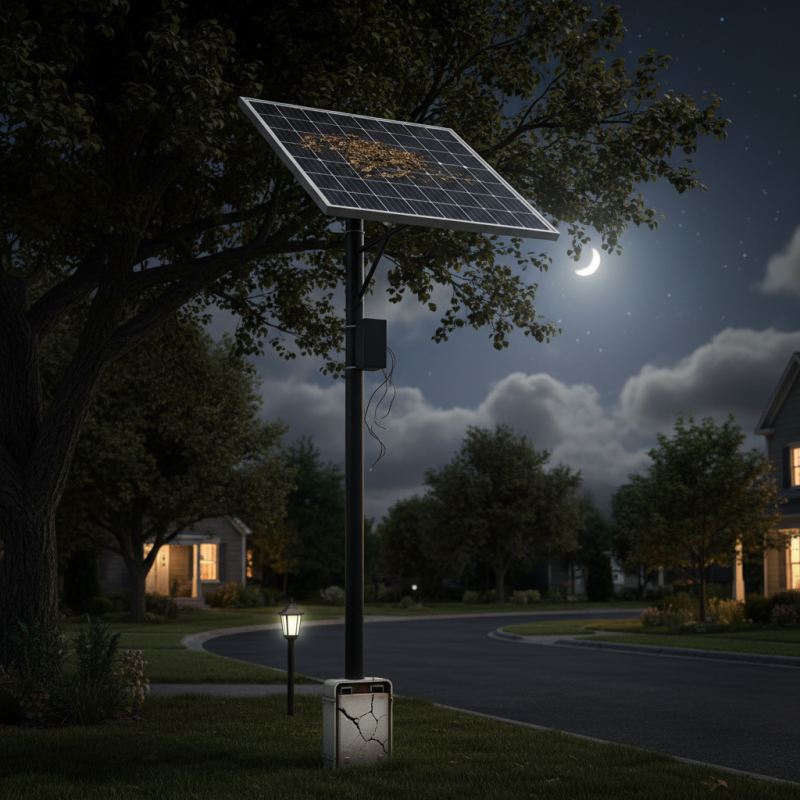
The first possibility is insufficient sunlight during the day. Solar panels need adequate exposure to charge the batteries. If their installation is obstructed by trees or buildings, they may not gather enough energy. Another factor could be a malfunctioning battery. Over time, batteries degrade and may fail to hold a charge.

Additionally, check the fixtures themselves. Dirt or debris on solar panels can prevent them from functioning correctly. Lastly, defective components, such as sensors, might cause the light to stay off. Identifying the root cause can lead to effective solutions. By addressing these issues, you can ensure your solar street light functions as intended.
Top 5 Reasons Your Solar Street Light Won't Turn On at Night?

Common Battery Issues Affecting Solar Street Light Operation

When it comes to solar street lights, the battery is often the unsung hero. Common battery issues can hinder the nighttime operation of these lights. According to industry reports, nearly 40% of solar street light failures are attributed to battery malfunctions. This includes poor charge retention and inadequate capacity.

Batteries lose efficiency over time, especially in extreme temperatures. For instance, temperatures exceeding 40°C can reduce a battery's lifespan significantly. This is why proper installation in a climate-appropriate manner is crucial. Regularly checking connections and ensuring that solar panels are clean can greatly enhance performance.

Tips: Replace batteries every 3-5 years to ensure reliable operation. Also, consider using lithium batteries; they generally offer better performance and longevity. Always monitor the battery voltage. If it drops below a certain threshold, it may indicate deeper issues.

In some situations, users may not realize that positioning plays a key role. Shadows cast by nearby structures can reduce the solar panel's efficiency, impacting the charge received. Additionally, the quality of batteries varies. Low-quality batteries may cost less initially, but they often yield poor performance. Investing in a reliable battery system is vital for long-term functionality.

Top 5 Reasons Your Solar Street Light Won't Turn On at Night

Insufficient Sunlight Exposure During the Day

Insufficient sunlight exposure during the day is a common reason why solar street lights fail to turn on at night. Solar panels convert sunlight into energy, which is stored in batteries for nighttime use. If the panels receive inadequate sunlight, the stored energy may be insufficient to power the lights after dark.

According to a report from the Solar Energy Industries Association, solar panel efficiency can be significantly affected by environmental factors. Dust, snow, or other obstructions on the panel can reduce sunlight intake. A study found that panels receiving only four hours of direct sunlight daily might generate up to 50% less energy compared to those exposed to optimal conditions. This indicates the importance of regular maintenance to ensure maximum exposure.

Furthermore, the orientation and tilt of the solar panels play a crucial role. Panels that are not angled correctly may miss crucial sunlight during peak hours. A poorly positioned solar street light can lead to underperformance and disappointment. Tracking the sunlight exposure hourly can help identify if panels are underperforming due to poor positioning or environmental factors. Using professional assessments can improve the reliability of solar energy solutions.

Faulty Sensor or Control Mechanism Malfunctions

When solar street lights fail to illuminate at night, faulty sensors or control mechanisms are often the culprits. According to industry reports, about 30% of solar street light failures can be traced back to these issues. Sensors are designed to detect ambient light levels and activate the lights accordingly. If these sensors are malfunctioning, performance can be severely compromised.

Common problems include dirt accumulation on sensors, which prevents them from accurately measuring light. This results in the lights remaining off after sunset. Additionally, wiring issues or internal component failures can disrupt the control mechanisms. Studies show that about 25% of these failures are due to poor installation practices. It's critical to ensure that all components are installed correctly to avoid future problems.

Regular maintenance is essential to extend the life of solar street lights. Manufacturers recommend cleaning sensors every few months to prevent dirt buildup. Monitoring the control system for signs of wear can also prevent sudden failures. Investing in maintenance can significantly reduce operational costs in the long run.

Top 5 Reasons Your Solar Street Light Won't Turn On at Night

Reason Description Potential Solution
Faulty Light Sensor The sensor that detects ambient light may be malfunctioning. Check the sensor for dirt or damage; replace if necessary.
Control Mechanism Issues The control board may be faulty or improperly programmed. Inspect and recalibrate the control mechanism or replace it.
Battery Problems The solar battery may be old, defective, or not charged adequately. Test the battery; consider replacing it if it's not holding a charge.
Poor Solar Panel Performance Debris or dirt on solar panels may reduce their effectiveness. Clean the solar panels regularly to ensure optimal performance.
Environmental Factors Severe weather conditions can affect the operation of solar lights. Monitor weather conditions and check for obstructions due to snow or debris.

Wiring Problems and Poor Connections in Solar Lights

When solar street lights fail to illuminate at night, wiring problems often play a crucial role. The connections between the solar panels, the battery, and the LED light must be secure. A study by the Solar Energy Industries Association highlights that up to 30% of solar light failures result from poor wiring practices. Inadequate soldering or loose connections can prevent electrical flow, leading to disappointment when darkness falls.

Wiring issues are not always easy to spot. Corroded connections can silently develop, impairing performance. Additionally, environmental factors like moisture can cause insulation breakdown. A report from the National Renewable Energy Laboratory underscores that routine maintenance can reduce these risks. Regular inspections can help identify potential wiring failures before they result in total blackout. Ignoring these factors may lead to longer downtime and increased repair costs, highlighting the importance of proper installation and regular upkeep.

Environmental Factors Impacting Solar Light Performance

Solar street lights rely heavily on environmental factors for optimal performance. One common issue is insufficient sunlight during the day. Cloudy days or heavy rainfall can significantly reduce the energy harvested by solar panels. In shaded areas, trees and buildings may block sunlight. This inconsistency in sunlight leads to inadequate charging and results in lights that fail to turn on at night.

Another factor to consider is temperature. Extremely low or high temperatures can affect the battery's efficiency. Batteries tend to lose their charging capacity in cold conditions. Similarly, excessive heat can also shorten their lifespan. Additionally, dust and debris on solar panels may hinder their performance. Regular cleaning is essential to ensure they capture maximum sunlight. Ignoring these factors may lead to unexpected outages during the night when lights are needed most.

FAQS

: What are common battery issues in solar street lights?

: Common issues include poor charge retention and inadequate capacity. These can lead to failures at night.

How does temperature affect battery performance?

Extreme temperatures, especially over 40°C, can shorten battery lifespan. Proper installation is crucial in such climates.

How often should batteries in solar street lights be replaced?

It is recommended to replace the batteries every 3-5 years for reliable operation. Regular monitoring is also important.

What role do solar panel shadows play in battery performance?

Shadows from nearby structures can reduce solar panel efficiency, impacting battery charge and overall performance.

What causes faulty sensor issues in solar street lights?

Dirt accumulation on sensors can prevent accurate light detection, causing lights to remain off at night.

How important is regular maintenance for solar street lights?

Regular maintenance, like cleaning sensors, extends the life of solar lights and reduces unexpected failures.

What wiring problems can impact solar street lights?

Poor connections and corroded wiring can prevent electrical flow, leading to lighting failures when it’s dark.

How can environmental factors affect solar light wiring?

Moisture and corrosion can break down insulation, leading to performance issues and potential failures over time.

What might happen if maintenance is ignored?

Ignoring maintenance can lead to longer downtimes and increased repair costs. Regular checks are essential.

Conclusion

If you're wondering, "Why is my solar street light not turning on at night?" several common issues could be at play. One major factor is battery problems, such as insufficient charge or degradation, which directly affects the light's performance after sunset. Additionally, if your solar street light experienced inadequate sunlight exposure during the day, it might not have enough energy stored for nighttime operation.

Other potential culprits include faulty sensors or control mechanisms that fail to detect darkness, as well as wiring issues like poor connections that disrupt the electrical flow. Finally, environmental conditions—such as extreme weather or obstructions that block sunlight—can also impact the effectiveness of solar lights. Understanding these reasons can help in troubleshooting and ensuring your solar street lights function efficiently at night.

Aria

Aria

Aria is a dedicated marketing professional with a deep passion for innovative strategies and a keen understanding of our company's product offerings. With a wealth of experience in the industry, Aria excels at crafting engaging content that highlights the unique features and benefits of our......